M3-C - Prompt Chaining
May 01, 2026 2:05 PM
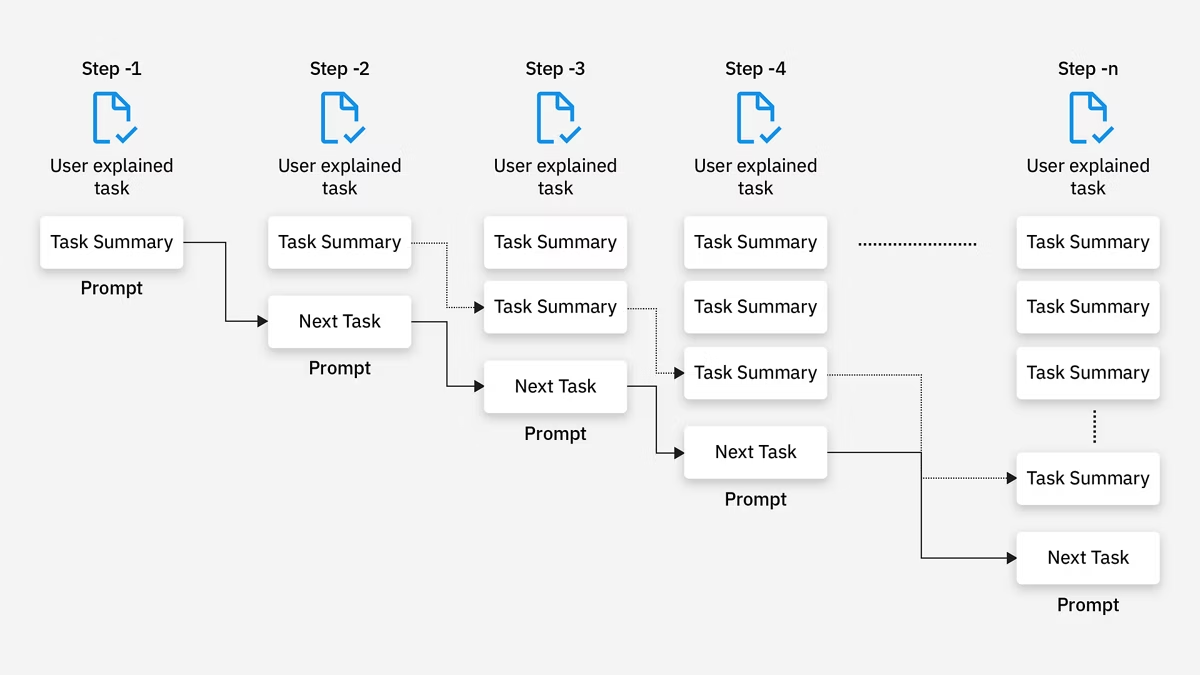
Prompt chaining is a natural language processing (NLP) technique, which leverages large language models (LLMs) that involves generating a desired output by following a series of prompts. In this process, a sequence of prompts is provided to an NLP model, guiding it to produce the desired response. The model learns to understand the context and relationships between the prompts, enabling it to generate coherent, consistent, and contextually rich text
Types of prompts
There are two main types of prompts that are generated when working with LLMs. These are:
Simple prompts
These are basic prompts that contain a single instruction or question for the model to respond to. They are typically used to initiate a conversation or to request information. An example of a simple prompt would be: "What is the weather like today?"
Complex prompts
These prompts contain multiple instructions or questions that require the model to perform a series of actions or provide a detailed response. They are often used to facilitate more advanced tasks or to engage in deeper conversations. An example of a complex prompt would be: "I'm looking for a restaurant that serves vegan food and is open until 10 pm. Can you recommend one?"
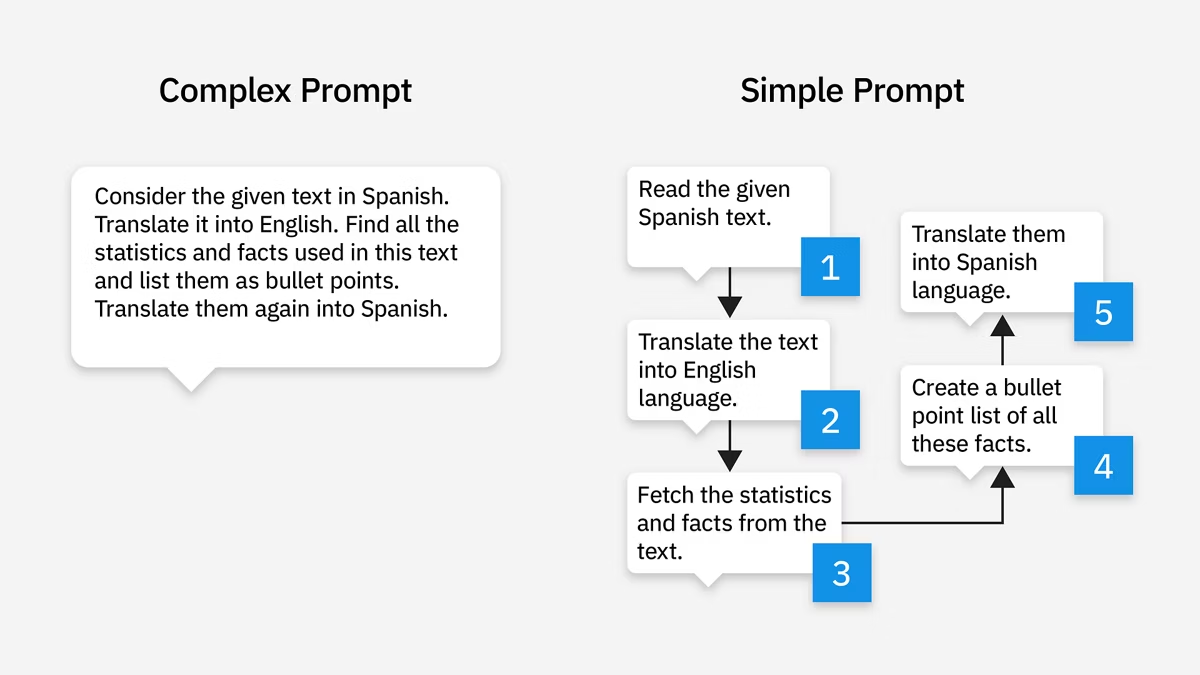
How to simplify complex prompts
Converting a complex prompt into a series of simple prompts can help break down a complex task into smaller sub-tasks. This approach can make it easier for users to understand the steps required to complete a request and reduce the risk of errors or misunderstandings.